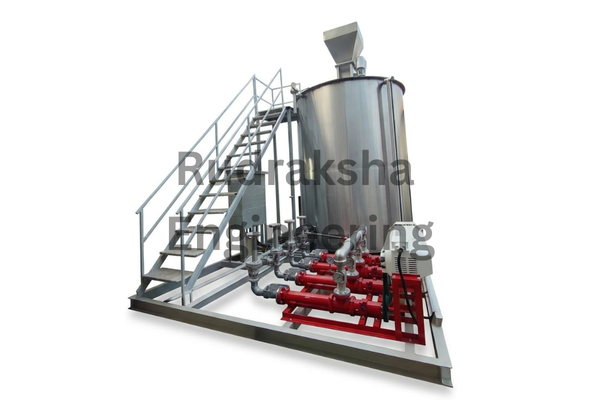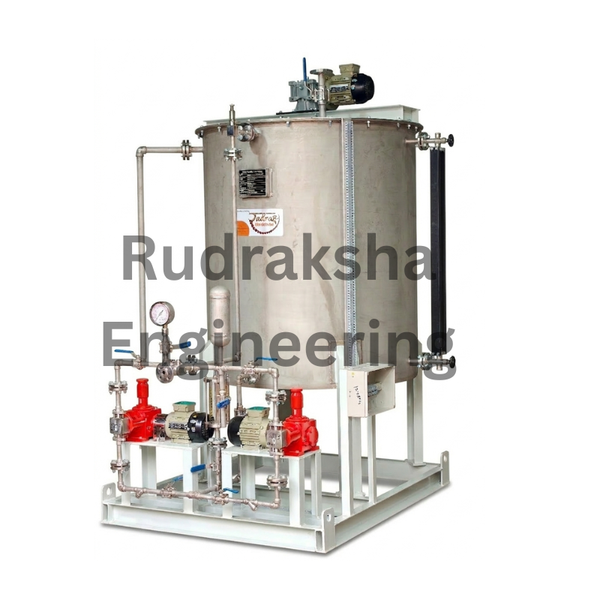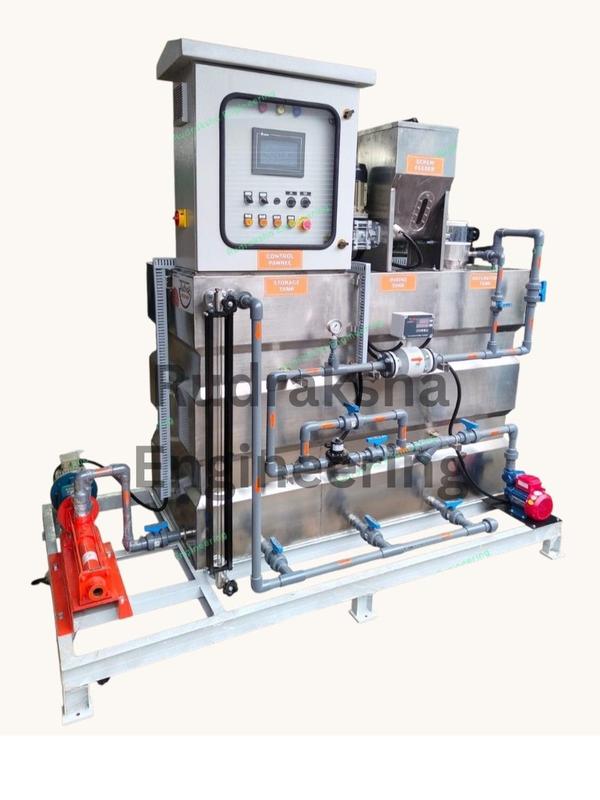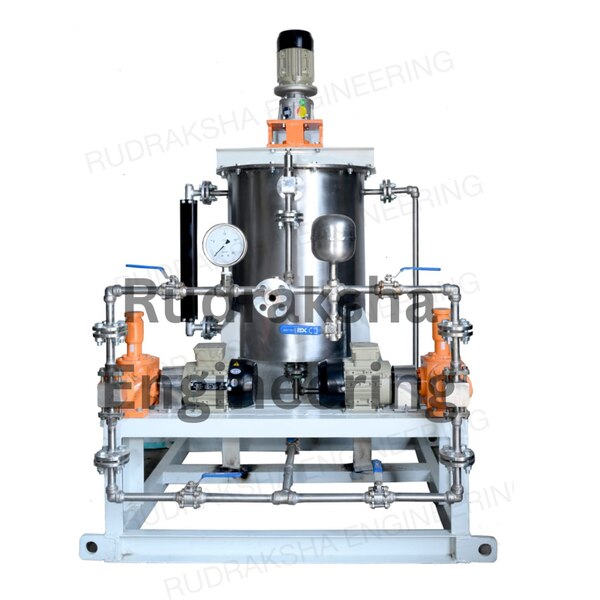
Chlorine Dosing System
Description
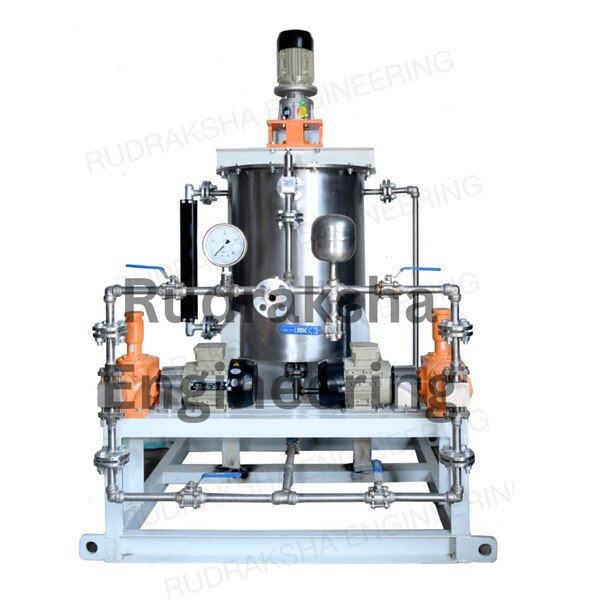
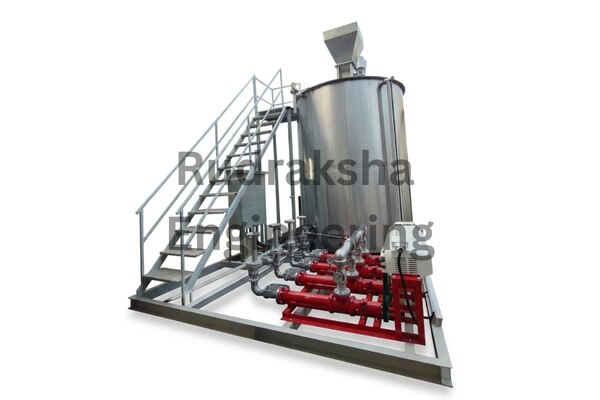
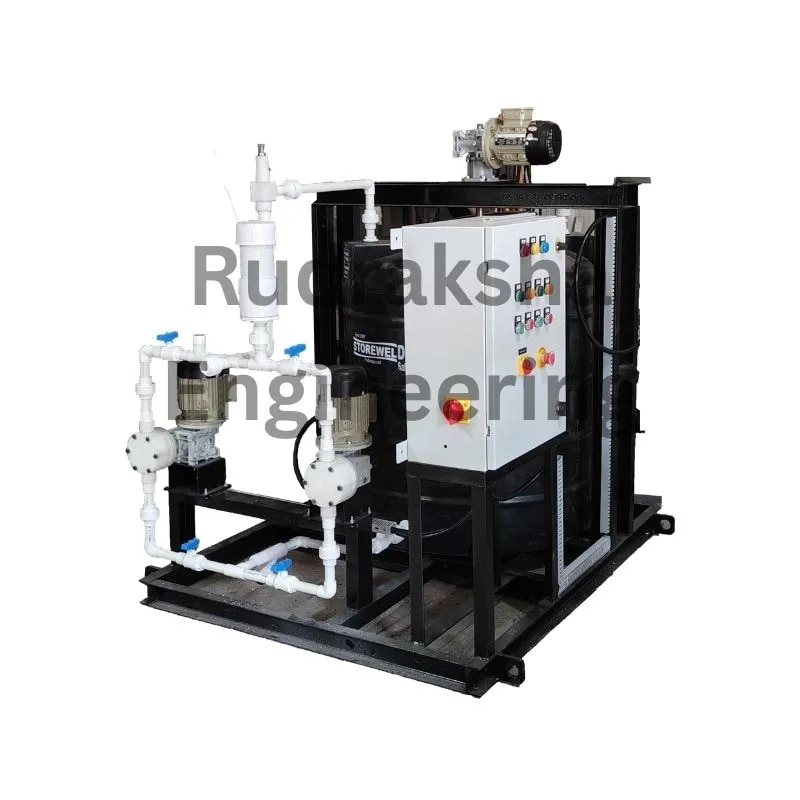
A Chlorine Dosing System is a type of chemical dosing system designed specifically to inject chlorine or chlorine-based solutions into water for disinfection and microbial control. These systems are widely used in water treatment plants, wastewater treatment, cooling towers, and swimming pools. ⚙️💧
🔎 What is a Chlorine Dosing System?
Chlorine is commonly used to kill bacteria, viruses, and other pathogens in water. A chlorine dosing system ensures precise and safe delivery of chlorine in liquid, gas, or tablet form.
The system maintains safe chlorine levels in the water while protecting equipment and operators.
⚙️ Main Components
Chlorine Storage Tank / Cylinder
Holds liquid chlorine (e.g., sodium hypochlorite) or gas
Materials: HDPE, FRP, stainless steel
Dosing Pump
Diaphragm dosing pump is most common
Provides accurate and adjustable flow
Can handle corrosive chlorine chemicals
Pulsation Dampener
Smoothens the pulsating flow from the pump
Calibration Pot / Flow Meter
Verifies the actual flow rate of chlorine
Injection Point / Quill / Injector
Injects chlorine safely into the water pipeline or tank
Valves & Piping
Includes isolation valves, check valves, and back-pressure valves
Materials compatible with chlorine (PVC, PP, PTFE, or SS)
Safety Equipment
Gas detectors, ventilation, PPE
Acid or neutralizer solution for spill control
🔄 How It Works
Chlorine is stored in a tank or cylinder.
The dosing pump draws chlorine and pushes it through piping.
The pulsation dampener ensures a steady flow.
Chlorine is injected into the water stream via a quill or injection nozzle.
Flow meters or calibration pots confirm the correct dosage.
✅ Result: Safe and precise chlorination of water.