Chennai
+919767982609
+919767982609

dosing system

6814772a5d263414004dd4a4 Card 2

product image
Industrial Dosing System

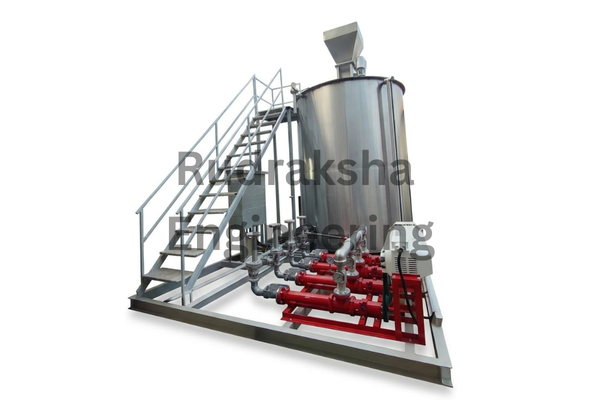
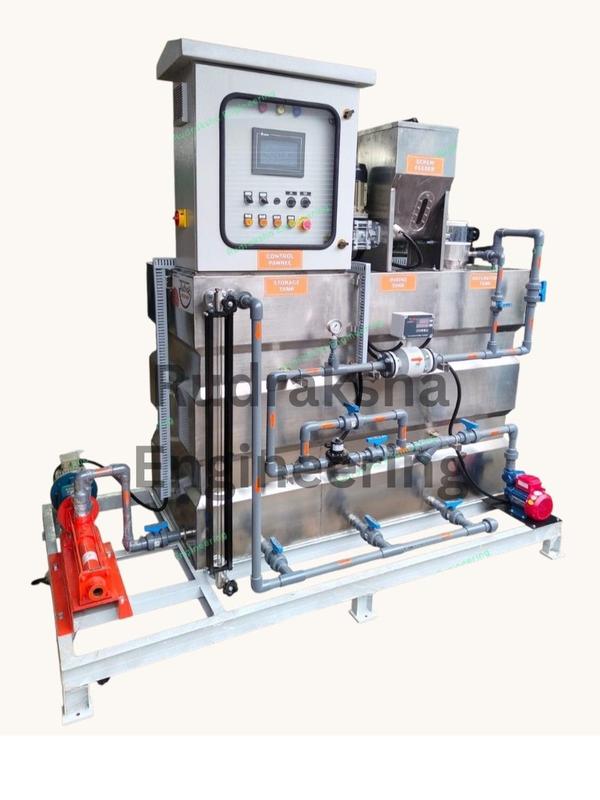
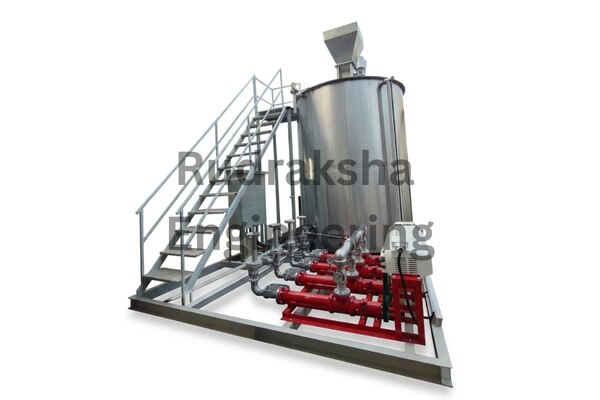
A Poly Dosing System (Polymer Dosing System) is an automated system used in water and wastewater treatment plants to prepare and dose polymer chemicals into the treatment process. Polymers act as flocculants or coagulant aids that help small suspended particles combine into larger flocs so they can settle or be filtered out easily.

6814772a5d263414004dd4a4 Card 2

product image
Industrial Dosing System

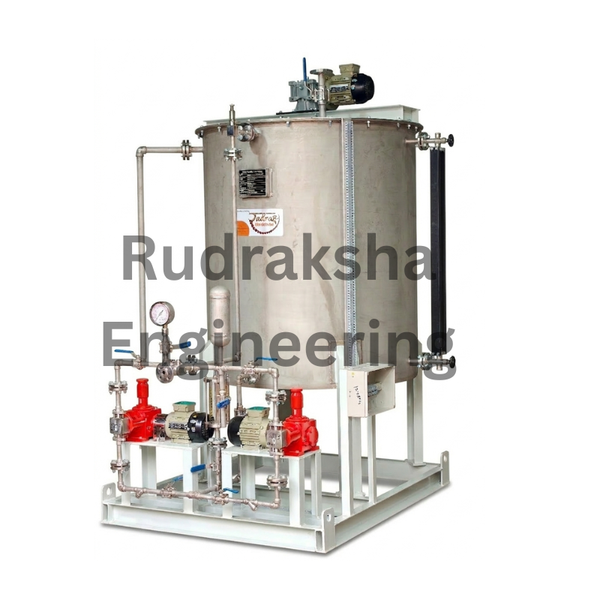
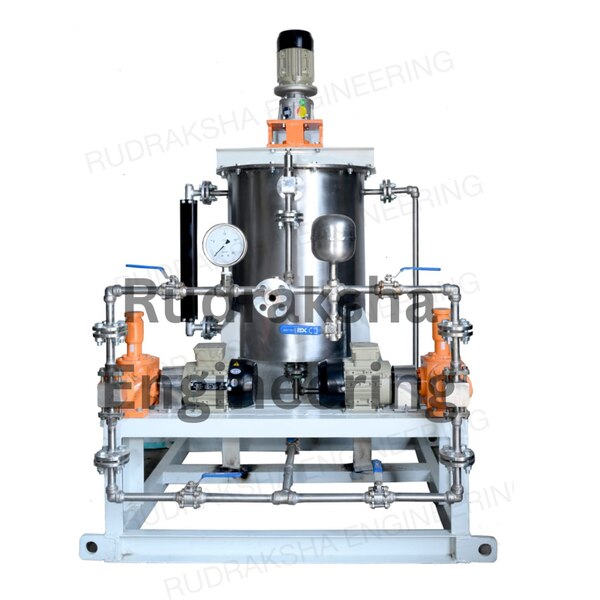
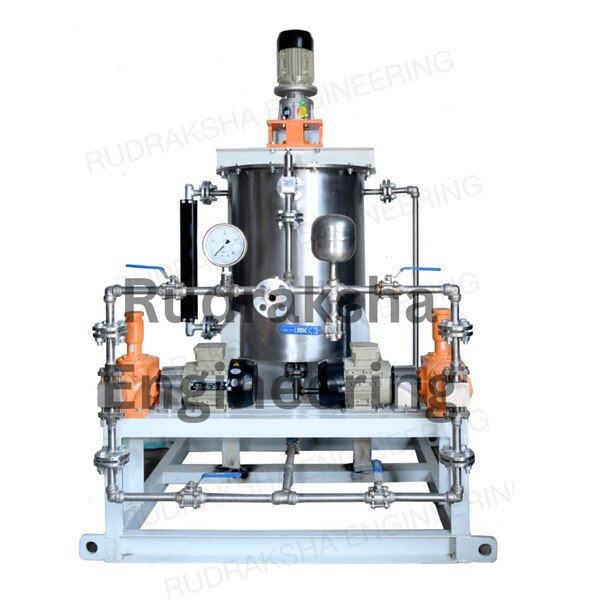
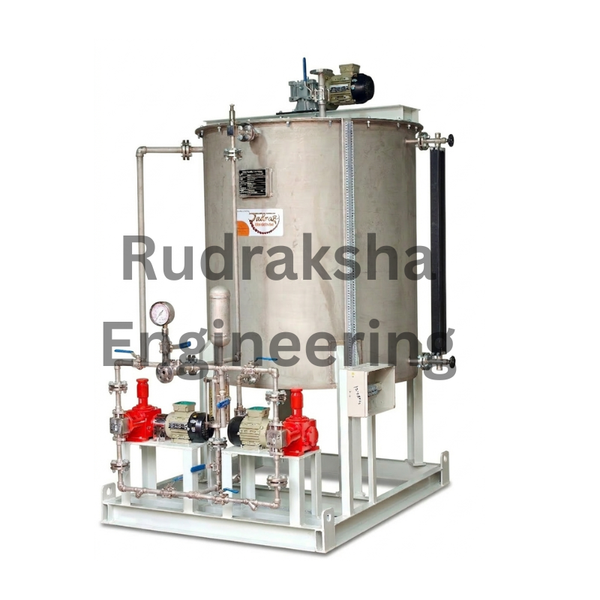
A Chemical Dosing System is a complete setup designed to accurately inject chemicals into a process stream or tank at a controlled rate. These systems are widely used in water treatment, RO plants, cooling towers, industrial processes, and chemical manufacturing. ⚙️💧 🔎 What is a Chemical Dosing System? A chemical dosing system ensures that a precise amount of chemical is added to a process at the right time and concentration. It prevents overdosing or underdosing, which could damage equipment, reduce process efficiency, or compromise safety. It typically consists of a pump, storage tank, piping, valves, and monitoring devices. ⚙️ Main Components of a Chemical Dosing System Chemical Storage Tank Stores the chemical to be dosed Material: HDPE, PP, FRP, or stainless steel depending on chemical Dosing Pump Delivers chemical at controlled flow rate Types: Diaphragm Dosing Pump – for precise, high-pressure dosing Peristaltic Pump – for corrosive or abrasive chemicals Piston/Plunger Pump – for high-pressure, high-viscosity fluids Pulsation Dampener Smooths out the pulsating flow from the pump Types: Bladder type, gas-filled, volumetric Calibration Pot / Column Measures actual pump output for calibration and verification Piping & Valves Connects storage tank, pump, and process line Includes isolation valves, check valves, and injection valves Flow Meter / Control System (Optional) Monitors and controls the dosing rate Can be integrated with SCADA or PLC systems Mixing / Agitation (Optional) Ensures uniform chemical concentration in the storage tank Uses top entry or bottom entry agitators 🔄 How a Chemical Dosing System Works Chemical is stored in the tank. The dosing pump draws chemical from the tank. The pump pushes chemical through piping, often via a pulsation dampener. Chemical enters the process stream through an injection or metering point. A flow meter or calibration pot may be used to verify actual dosing. ✅ Result: Accurate and consistent chemical addition. 📊 Common Applications Water treatment – chlorine, acid/alkali, coagulants, antiscalants RO plants – antiscalant injection, pH correction Cooling towers / boilers – corrosion inhibitors, biocides Chemical industry – precise addition of catalysts or reactants Food & beverage – sanitizers and process additives

6814772a5d263414004dd4a4 Card 2

product image
Industrial Dosing System

A Dosing System (also called a Chemical Dosing System) is an industrial setup used to accurately inject a controlled amount of chemical into a process, pipeline, or tank. It is widely used in industries like water treatment, chemical processing, pharmaceuticals, food processing, and power plants to ensure precise chemical addition.

6814772a5d263414004dd4a4 Card 2

product image
Industrial Dosing System

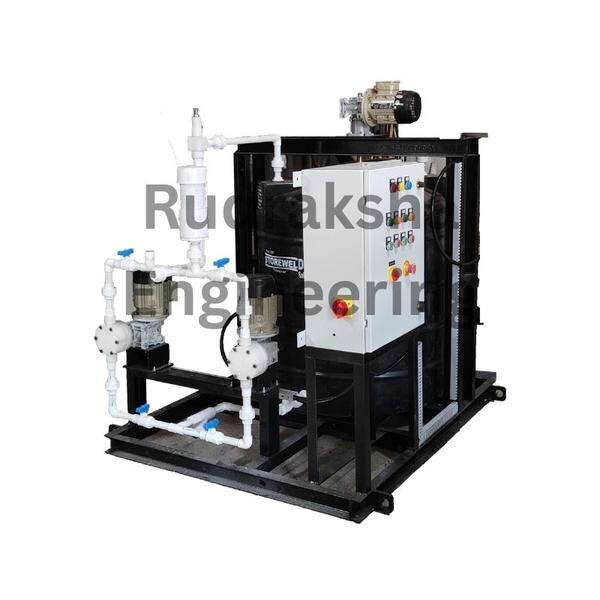
An Additive Dosing System is a specialized type of chemical dosing system designed to inject precise amounts of additives into a process stream, tank, or pipeline. These additives are usually used to enhance performance, prevent scaling, inhibit corrosion, or improve product quality. ⚙️💧 🔎 What is an Additive Dosing System? The system ensures that specific chemicals or additives are added accurately and consistently to a process. Unlike general chemical dosing, additive dosing often deals with small volumes of highly potent chemicals that require high-precision pumps and controlled flow. It is widely used in water treatment, oil & gas, cooling systems, food processing, and industrial manufacturing. ⚙️ Main Components Additive Storage Tank Holds the additive solution Materials: HDPE, PP, FRP, stainless steel May include agitators to maintain uniform concentration Dosing Pump Types: Diaphragm dosing pump – precise, high-pressure dosing Peristaltic pump – handles corrosive or viscous additives Plunger/piston pump – high-pressure industrial applications Pulsation Dampener Smooths pulsating flow from the pump Types: bladder type, gas-filled, volumetric Calibration Pot / Column Verifies actual flow from the dosing pump Piping & Valves Includes injection valves, check valves, isolation valves Materials compatible with additives Flow Meter / Control System (optional) Monitors dosing rate Can be connected to PLC or SCADA for automated control Mixing / Agitation (Optional) Keeps additives well-dispersed in the tank Can be top entry or bottom entry agitators

6814772a5d263414004dd4a4 Card 2

product image
Industrial Dosing System

An Auto Flocculant Dosing System is an automated setup used in water and wastewater treatment plants to dose flocculant chemicals in controlled amounts so that suspended particles clump together (flocculate) and can be easily removed by settling or filtration.

6814772a5d263414004dd4a4 Card 2

product image
Industrial Dosing System

A Chlorine Dosing System is a type of chemical dosing system designed specifically to inject chlorine or chlorine-based solutions into water for disinfection and microbial control. These systems are widely used in water treatment plants, wastewater treatment, cooling towers, and swimming pools. ⚙️💧 🔎 What is a Chlorine Dosing System? Chlorine is commonly used to kill bacteria, viruses, and other pathogens in water. A chlorine dosing system ensures precise and safe delivery of chlorine in liquid, gas, or tablet form. The system maintains safe chlorine levels in the water while protecting equipment and operators. ⚙️ Main Components Chlorine Storage Tank / Cylinder Holds liquid chlorine (e.g., sodium hypochlorite) or gas Materials: HDPE, FRP, stainless steel Dosing Pump Diaphragm dosing pump is most common Provides accurate and adjustable flow Can handle corrosive chlorine chemicals Pulsation Dampener Smoothens the pulsating flow from the pump Calibration Pot / Flow Meter Verifies the actual flow rate of chlorine Injection Point / Quill / Injector Injects chlorine safely into the water pipeline or tank Valves & Piping Includes isolation valves, check valves, and back-pressure valves Materials compatible with chlorine (PVC, PP, PTFE, or SS) Safety Equipment Gas detectors, ventilation, PPE Acid or neutralizer solution for spill control 🔄 How It Works Chlorine is stored in a tank or cylinder. The dosing pump draws chlorine and pushes it through piping. The pulsation dampener ensures a steady flow. Chlorine is injected into the water stream via a quill or injection nozzle. Flow meters or calibration pots confirm the correct dosage. ✅ Result: Safe and precise chlorination of water.

6814772a5d263414004dd4a4 Card 2

product image
Industrial Dosing System

An IoT-Based Dosing System is a smart chemical dosing solution that integrates traditional dosing equipment with Internet of Things (IoT) technology for remote monitoring, automation, and precise control. These systems are widely used in water treatment, RO plants, cooling towers, industrial processes, and chemical plants. 🌐⚙️💧 🔎 What is an IoT-Based Dosing System? An IoT-based dosing system combines: Dosing pumps, storage tanks, and valves Sensors (flow, level, pressure, chemical concentration) Connectivity modules (Wi-Fi, GSM, LoRa, or Ethernet) Cloud-based monitoring and control software The system allows operators to: Monitor dosing remotely in real-time Receive alerts for errors, low chemical levels, or leaks Adjust dosing rates automatically based on sensor feedback Collect historical data for process optimization ⚙️ Main Components Chemical Storage Tank Equipped with level sensors to monitor chemical volume Dosing Pump Diaphragm, peristaltic, or plunger pumps Equipped with flow sensors to track actual dosing Pulsation Dampener Reduces flow fluctuations for consistent chemical injection Flow / Pressure / Level Sensors Measure dosing accuracy, tank levels, and system pressure Control Unit / PLC / IoT Module Receives sensor data Controls pump operation Connects to cloud or local network Communication Interface Wi-Fi, 4G/5G, Ethernet, or LoRaWAN for remote access Cloud Software / Mobile App Real-time monitoring Remote control Alerts and notifications Historical data logging

6814772a5d263414004dd4a4 Card 2

product image
Industrial Dosing System

A Low Pressure and High Pressure Dosing System is a classification of chemical dosing systems based on the operating pressure of the dosing pump and pipeline. These systems are widely used in water treatment, RO plants, industrial chemical processes, and boiler/cooling water treatment. ⚙️💧 🔎 What is a Low Pressure & High Pressure Dosing System? Dosing systems inject chemicals into a process at controlled rates. The difference between low-pressure and high-pressure systems lies mainly in: Pump type Operating pressure Piping and valve requirements Applications 1️⃣ Low Pressure Dosing System Characteristics Operating Pressure: up to 5–10 bar (70–150 psi) Flow Rate: Usually moderate Pump Type: Diaphragm, peristaltic, or small plunger pumps Pipe Material: PVC, PP, or HDPE Applications Water treatment plants – chlorine, acid/alkali dosing RO plants – antiscalant injection Cooling towers – biocides, corrosion inhibitors Small chemical processes Advantages ✔ Simple and cost-effective ✔ Easy to install and maintain ✔ Suitable for continuous dosing at low pressures 2️⃣ High Pressure Dosing System Characteristics Operating Pressure: 10–100+ bar (150–1500+ psi) Flow Rate: Can be high or low depending on pump Pump Type: High-pressure plunger/piston pumps, heavy-duty diaphragm pumps Pipe Material: Stainless steel, PTFE-lined, or high-pressure-rated pipes Applications High-pressure RO plants – antiscalant injection Industrial chemical reactors Oil & gas pipelines – corrosion inhibitors, methanol injection Boilers and high-pressure water treatment

Subcategory Tags

Phone Number

+919767982609

Mon-Thu: 10 AM - 2 PM • Fri: 3 PM - 7AM

Other Website Visit our other website
Address Navnath Nagar Plot, Street No. 4, behind Shree krushna petrol pump, MIDC Ambad, Nashik, Maharashtra 422010

Chennai, India, 422010