Thank you for writing to us. One of our executive will reach back to you through your submitted medium. In case there’s an urgency, feel free to connect over WhatsApp for faster response.
Prefer calling? Dial +919767982609 (International callers) or +919767982609 (Indian callers).
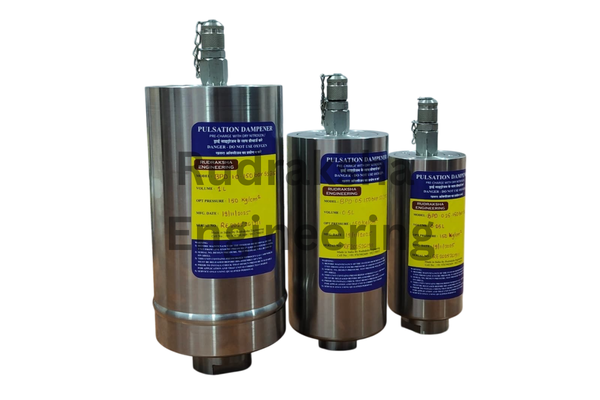
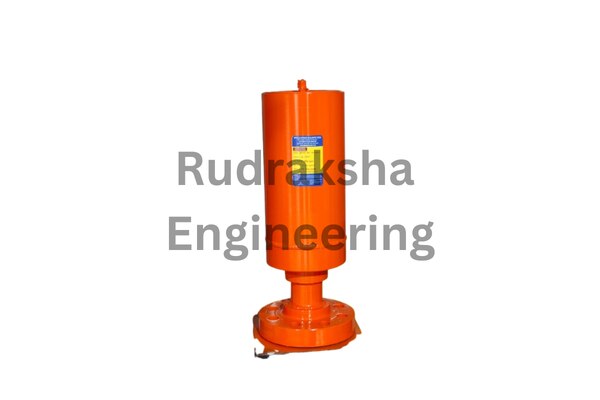
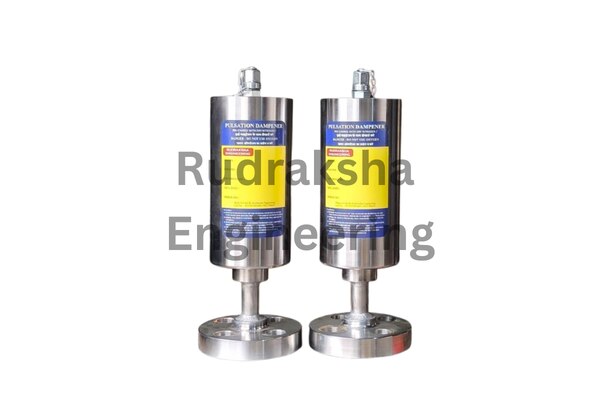
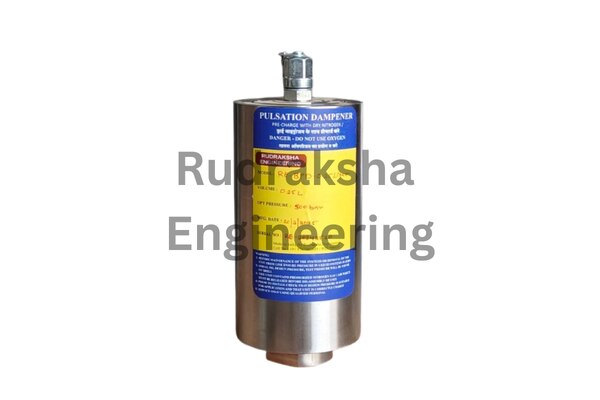
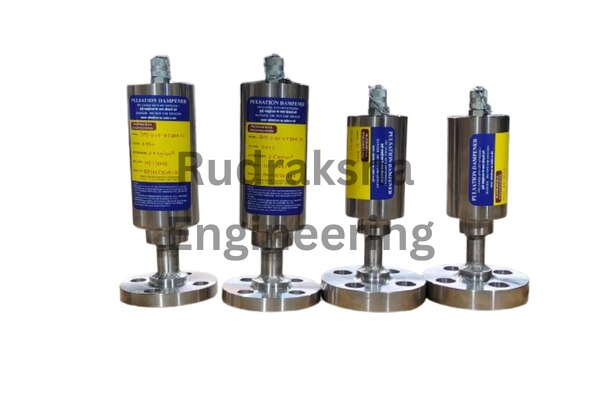
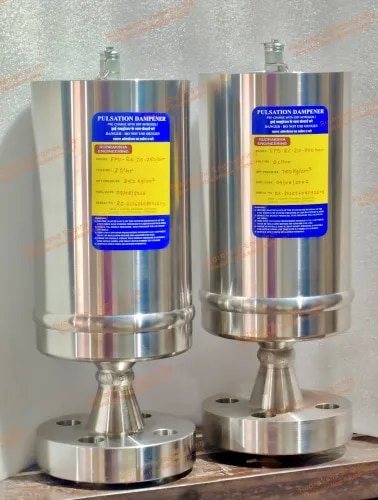
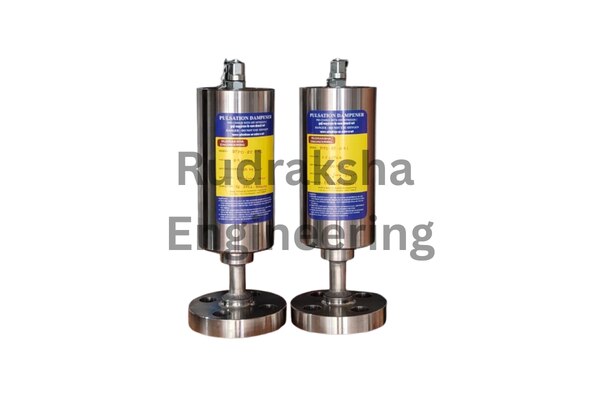
A Pulsation Dampener is a device used in pumping systems to reduce pressure fluctuations (pulsations) and provide smooth fluid flow. It is commonly installed with reciprocating pumps and dosing pumps to protect pipelines and instruments from pressure spikes.
A Bladder Type Pulsation Dampener is a device used in chemical dosing systems and industrial pipelines to smooth out pressure fluctuations and stabilize flow from positive displacement pumps like diaphragm or plunger pumps. It is very common in water treatment, RO plants, chemical processing, and industrial applications. ⚙️💧
🔎 What is a Bladder Type Pulsation Dampener?
A bladder type dampener contains a flexible rubber or elastomer bladder inside a pressure vessel. The bladder separates the liquid from the gas, which acts as a cushion to absorb pressure spikes from pulsating pumps.
When the pump produces a high-pressure pulse, the liquid compresses the bladder.
The gas inside the bladder absorbs the energy, reducing vibration and shock.
During low-pressure periods, the bladder expands, pushing liquid back into the pipeline.
✅ Result: Smooth, nearly continuous flow, protecting the system and improving dosing accuracy.
⚙️ Main Components
Pressure Vessel / Body – Can be made of stainless steel, PP, UPVC, or PTFE
Flexible Bladder – Chemical-resistant elastomer
Gas Chamber – Pre-charged with nitrogen or air
Fluid Inlet/Outlet – Connects to pump or pipeline
Gas Charging Valve – Adjusts pre-charge pressure
Mounting Bracket – Optional, for secure installation
🔄 Working Principle
Pump delivers pulsating liquid flow.
Liquid enters the bladder dampener.
The bladder compresses, absorbing the pulse.
Gas expands to push fluid back during low-pressure cycle.
➡️ The result is a steady, vibration-free flow in the piping system.
A Gas-Filled Bladder Type Pulsation Dampener is a specialized device used with dosing pumps to smooth out pulsations in the flow and stabilize pressure, ensuring accurate and safe chemical injection. It is widely used in water treatment, RO plants, chemical processing, and industrial piping systems. ⚙️💧
🔎 What is a Gas-Filled Bladder Type Pulsation Dampener?
This type of pulsation dampener contains a flexible bladder inside a pressure vessel, which is pre-charged with gas (usually nitrogen).
The bladder separates the liquid from the gas.
When the pump produces a pressure spike, the liquid compresses the bladder slightly, absorbing the energy.
When the pressure drops, the gas pushes the liquid back into the pipeline, smoothing the flow.
⚙️ Main Components
Pressure vessel – Made of stainless steel, PVC, PP, or other materials
Bladder – Flexible, chemical-resistant rubber or elastomer
Gas chamber – Pre-charged with nitrogen or air
Fluid inlet/outlet connections – To connect to dosing pump or pipeline
Gas charging valve – For adjusting gas pressure
Mounting bracket – Optional, for secure installation
🔄 Working Principle
The dosing pump sends pulsating flow into the pipeline.
The liquid enters the bladder dampener.
The bladder compresses, absorbing pressure peaks.
During low-pressure periods, the gas expands, pushing the liquid back.
➡️ Result: Smooth, continuous flow with reduced pulsation.
A Volumetric Pulsation Dampener is a device used in dosing pump systems to absorb and smooth out flow pulsations created by positive displacement pumps. It works by providing a temporary storage volume where excess fluid during pressure spikes can expand and then release smoothly. ⚙️💧
🔎 What is a Volumetric Pulsation Dampener?
A volumetric pulsation dampener reduces the pressure and flow fluctuations produced by pumps such as diaphragm or plunger dosing pumps.
It contains an internal gas chamber or flexible diaphragm that compresses and expands to absorb pulsations.
⚙️ Main Components
Dampener body – Pressure vessel (metal or plastic)
Flexible diaphragm / bladder – Separates gas and liquid
Gas chamber – Usually filled with air or nitrogen
Fluid connection – Inlet/outlet from pipeline
Charging valve – Used to set gas pressure (in some models)
🔄 Working Principle
The dosing pump produces pulsating flow.
When a pressure spike occurs, some liquid enters the dampener.
The gas chamber compresses, absorbing the pressure.
When pressure drops, the gas expands and pushes liquid back into the pipeline.
➡️ Result: Smooth and stable fluid flow.
Type Bladder Type
Volume 2 L
Max Pressure 600
Connection Size 2500# flange end
Body Material SS304
Bladder Material EPDM
Mounting Type Top Mounted
Application Dosing Pump, Diaphragm Pump, Plunger Pump
Design Code IS Standard
Brand Indian Make
A gas-filled pulsation dampener is a device used in pumping systems to reduce pressure fluctuations and flow pulsations caused by reciprocating pumps.
It contains a gas cushion separated by a bladder, diaphragm, or piston, which compresses and expands to absorb energy spikes.
This ensures smooth flow, protects pipelines and instruments, and improves system performance and pump life.
A PP / UPVC / PTFE Pulsation Dampener is a device used in dosing pump systems to reduce pressure pulsations and flow fluctuations caused by positive displacement pumps. It helps ensure smooth and stable fluid flow in pipelines. ⚙️💧
🔎 What is a Pulsation Dampener?
A pulsation dampener is installed on the discharge line of a dosing pump to absorb the pressure spikes (pulsations) created during the pumping cycle.
Dosing pumps deliver fluid in pulses, not continuous flow. The dampener smooths these pulses to create a steady flow.
🧱 Materials Used
1️⃣ PP (Polypropylene)
Good chemical resistance
Lightweight
Used for general chemical dosing
2️⃣ UPVC (Unplasticized Polyvinyl Chloride)
High corrosion resistance
Common in water treatment plants
Cost-effective
3️⃣ PTFE (Polytetrafluoroethylene)
Excellent chemical resistance
Suitable for strong acids and solvents
Used in harsh chemical environments
⚙️ Main Components
Dampener body (PP / UPVC / PTFE)
Internal diaphragm or bladder
Gas chamber (usually nitrogen or air)
Fluid inlet/outlet connection
Charging valve (in some models)
🔄 Working Principle
The dosing pump sends pulsating fluid flow.
The pulsation dampener absorbs pressure spikes.
The internal diaphragm compresses the gas chamber.
The stored energy is released smoothly.
➡️ Result: Smooth, constant flow in the pipeline.